The Story of Anton Schneider

Where Time Becomes a Story

Our history

Since 1848. And long before.

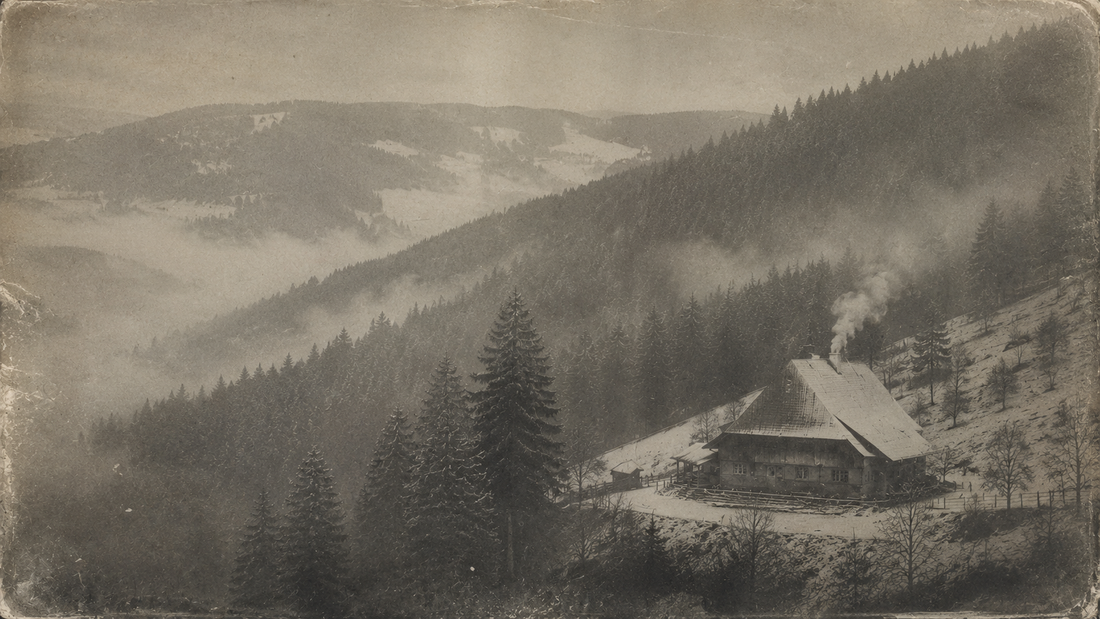
The story of Anton Schneider cannot be told without the story of the cuckoo clock. That is why it does not begin in 1848, but two hundred years earlier, in the snowy heights of the Black Forest.

c. 1640The first wooden clocks are built in the Black Forest.
1848Anton Schneider founds his workshop on the Eschenbühl in Schonach.
2026A new start: the manufactory resumes production in Gütenbach.

Part one

Before Anton Schneider.

around

1640

Origins

A forest full of time.

Why did one of the most remote regions of Germany become the clock workshop of the world? The answer begins after the Thirty Years' War. The region was poor, the soil thin, the winters long and snowy. What it had in abundance was wood, and time.

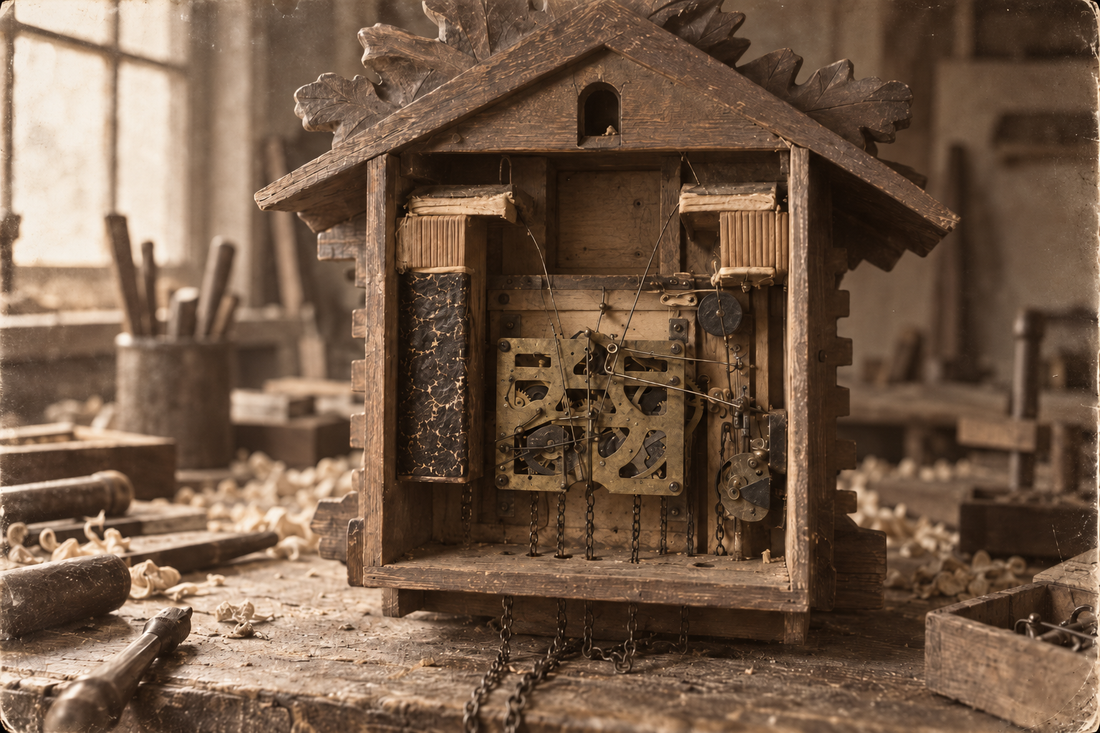
Tradition has it that in the middle of the 17th century a glass carrier, one of the traders who took Black Forest glassware across Europe, brought a clock home from abroad. It was rebuilt at the Glashof in Waldau. The people of the Black Forest did not invent the clock. They did something more important: they built it from wood.

Metal clocks were guild goods, expensive and reserved for the towns. Wooden clocks could be built by anyone, and they were affordable enough for farmers and ordinary citizens.
around

1730

Invention

The first cuckoo calls.

The Black Forest still argues about the cuckoo's hour of birth, about as passionately as about the best recipe for Black Forest gateau. The chronicler Markus Fidelis Jäck wrote in 1810 that Franz Anton Ketterer of Schönwald built the first cuckoo clocks in the early 1730s, inspired by the bellows of the church organ. Father Franz Steyrer reported as early as 1796 that Michael Dilger of Neukirch and Matthäus Hummel of Glashütte were the first, in 1742.

Neither offers proof. And strictly speaking the mechanical cuckoo is older still: a cuckoo clock is mentioned in the collection of the Elector of Saxony in 1629.

One thing is certain: the idea was perfected in the Black Forest. Two small organ pipes, one high and one low, blown by two bellows. A rooster would have needed four notes, a nightingale countless. To this day the call in every mechanical Anton Schneider clock works on exactly this principle.

around

1800

Trade

On foot across Europe.

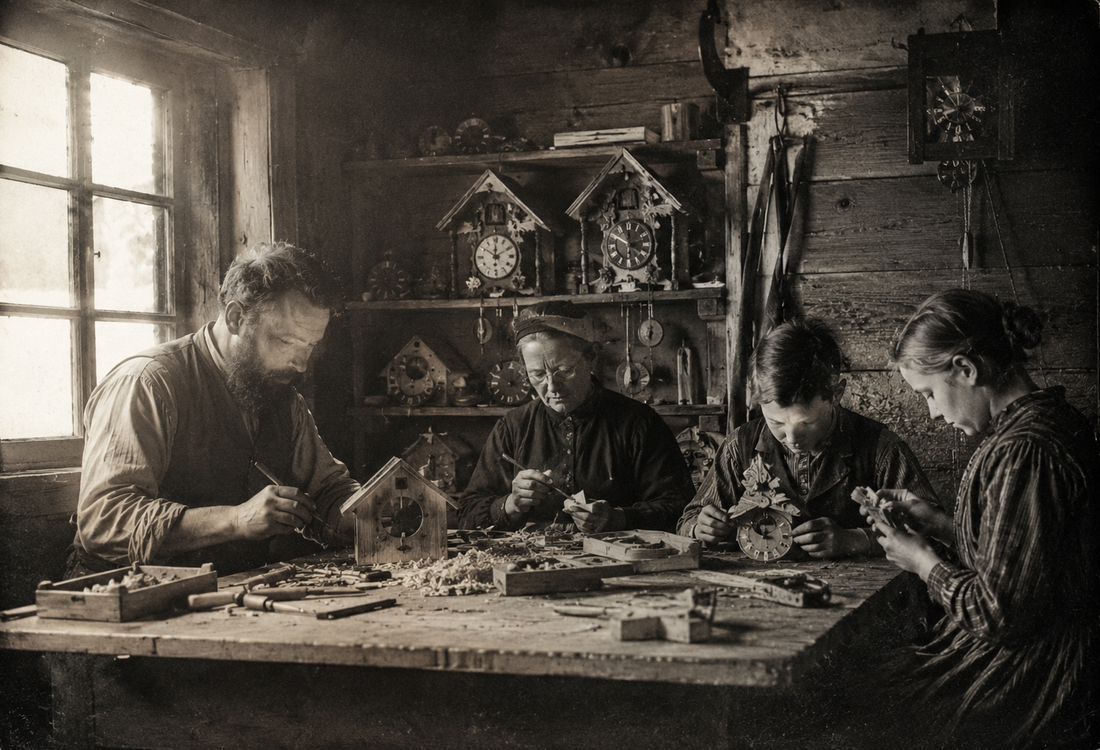
A second idea was far ahead of its time: division of labour. No single clockmaker built the whole clock. Many specialists worked together, frame makers, chain makers, dial painters.

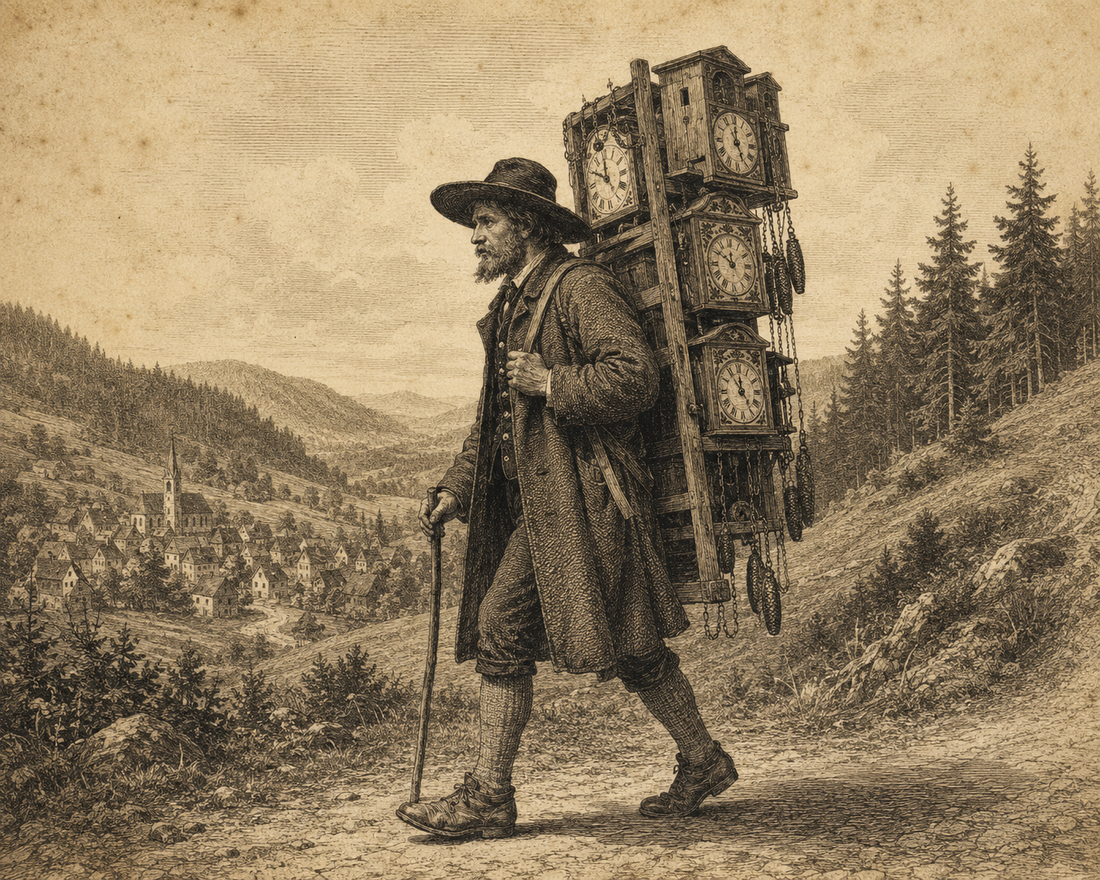
Around 1800 some 150,000 clocks a year were already leaving the parlours of the Black Forest. They were carried by the legendary clock carriers: men who walked across Europe with wooden frames on their backs, as far as England, France and Russia.

Part two

From farmhouse to manufactory.

1848

Founding

A young clockmaker on the Eschenbühl.

It is 1848. Germany is in the middle of a revolution, and everywhere people debate freedom and new beginnings. High above Schonach, on the Eschenbühl, a young clockmaker named Anton Schneider is thinking about a beginning of his own.

In his farmhouse he starts making cuckoo clocks, at the height of the Black Forest clock trade. Around 1840 some 5,000 people work in about 1,000 small clockmaking houses in the region, and 600,000 clocks are made every year. Anton Schneider is part of this movement, and he will outlast it. Over generations the farmhouse parlour grows into a manufactory whose name is known on every continent.

1850

Design

The cuckoo clock gets its face.

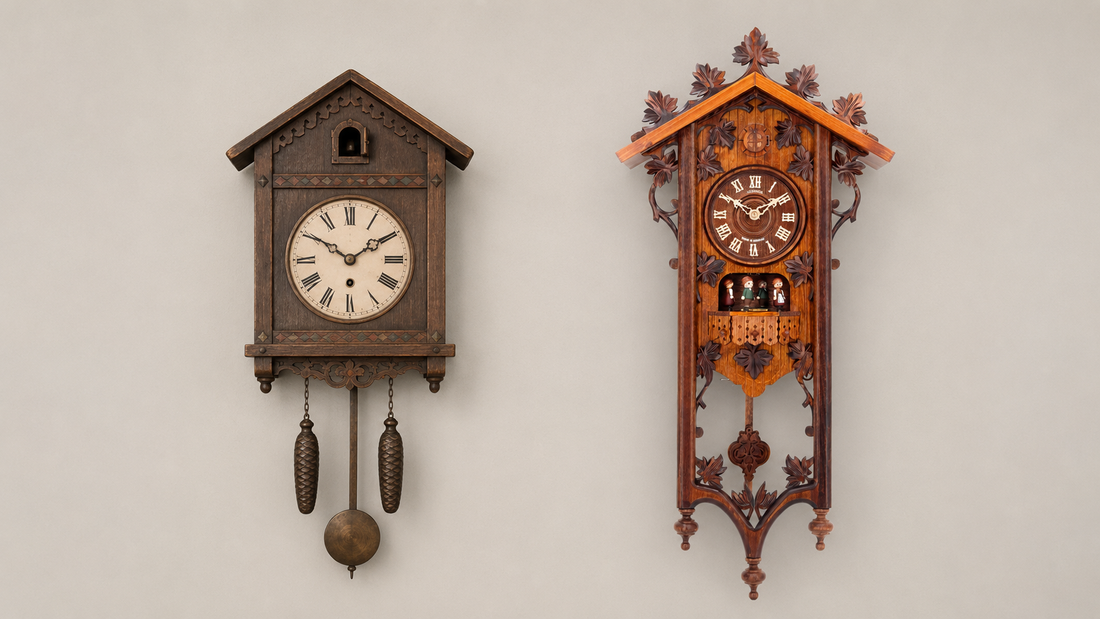
Curious but true: when Anton Schneider founded his workshop, the cuckoo clock did not yet look like the cuckoo clock. The cuckoo called from plain, painted shield clocks.

In 1850 the Grand Ducal Baden Clockmaking School was founded in Furtwangen. Its first director Robert Gerwig, later the builder of the Black Forest Railway, called a design competition. The most influential design came from the architect Friedrich Eisenlohr: a clock in the shape of a railway keeper's house with a pitched roof, the Bahnhäusle clock. The railway was the symbol of modern times, and suddenly it hung in the living room as a clock.

From the 1860s the little houses were decorated ever more richly: vine leaves, oak leaves, hunting motifs, forest animals, weights shaped like fir cones. This form is still the essence of the Black Forest cuckoo clock today, and few houses became as well known for richly decorated clocks and lively scenes as Anton Schneider Söhne.

1880

to 1950

World market

From the Black Forest to the world.

At the end of the 19th century more than 1.5 million clocks a year left the Black Forest. Cottage industry turned into factories, clock carriers into world trade. The cuckoo clock became the region's most famous ambassador.

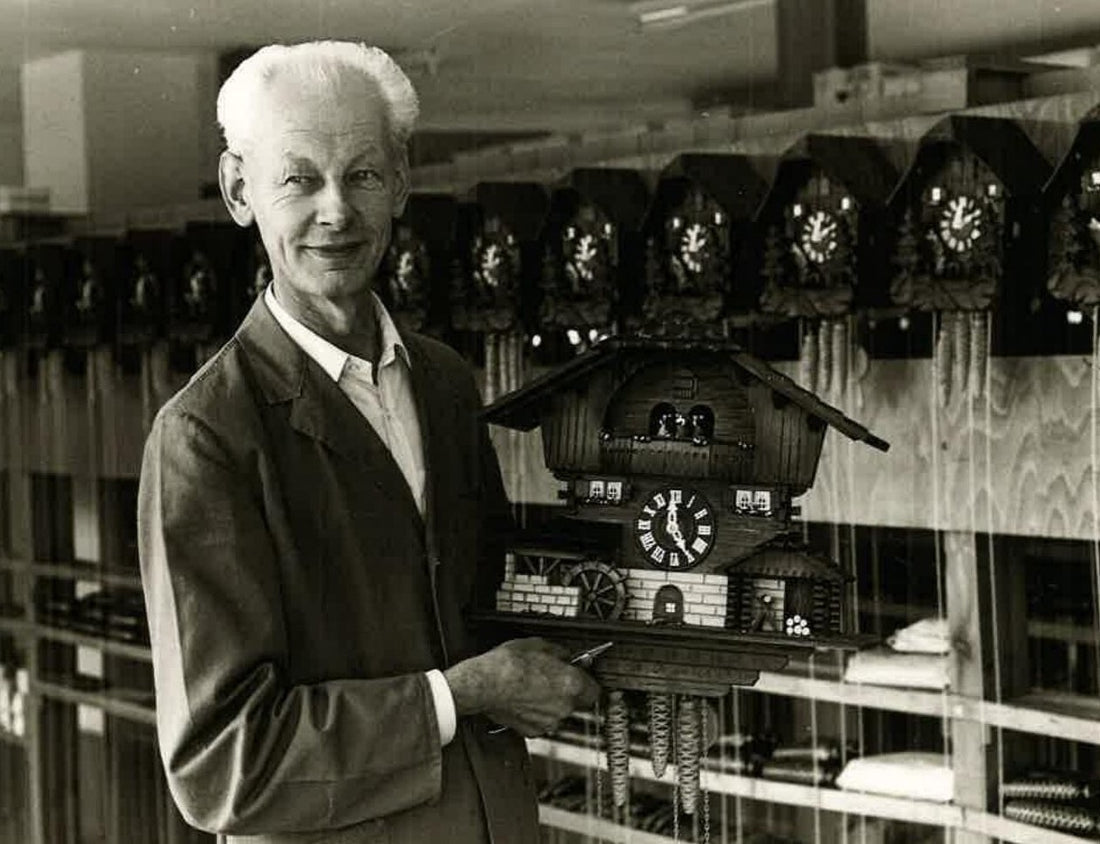
The Anton Schneider workshop went through this period as through all that followed: persistently, in family hands, from generation to generation. Two world wars, inflation, economic crises, and the workshop in Schonach kept ticking. In total, six generations of the Schneider family led the company and passed on their knowledge like a baton.

1952

Modern times

A factory of its own.

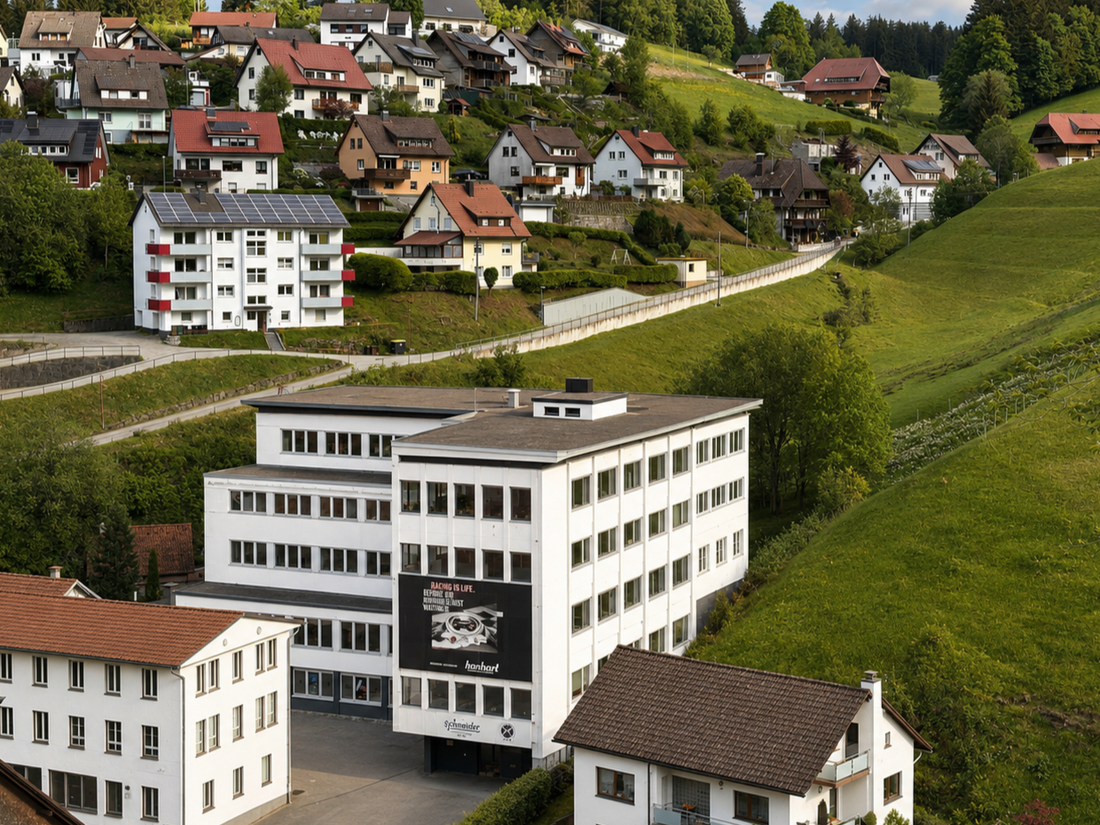
In 1952 the family took the big step: the move from the farmhouse to a factory building of its own on Triberger Straße in Schonach. By 1985 the site had been extended in seven stages. Anton Schneider Söhne became one of the largest and most modern cuckoo clock makers in the Black Forest.

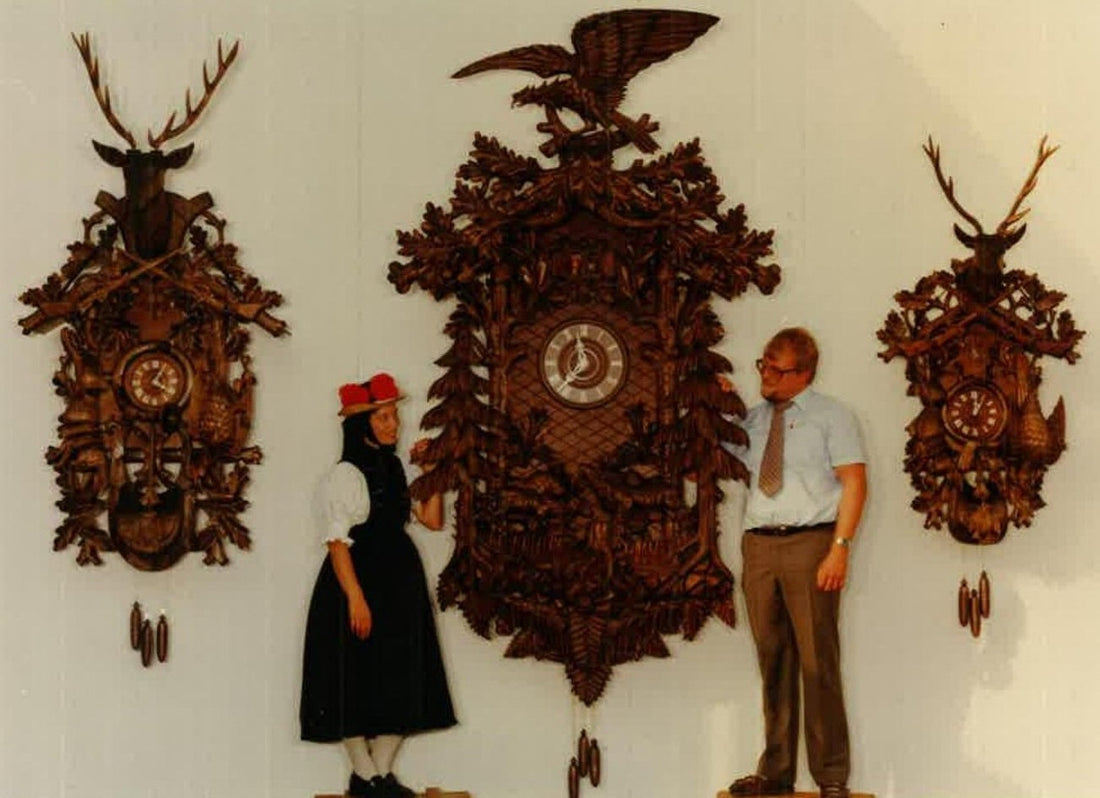
The range grew to around 300 models, from the 19 centimetre entry model to the three metre show clock. Hunting pieces with stag's head and oak leaves, chalets with mill wheels, beer garden scenes and dancing figures. In 2007 the model „Watzmannhaus“ was named Cuckoo Clock of the Year.

Part three

Upheaval and a new start.

1970

to 2020

Put to the test

Quartz, copies and the question of authenticity.

The second half of the 20th century put the whole trade to the test. The quartz clock changed the world market, and cheap copies flooded the souvenir shops: clocks that looked like Black Forest cuckoo clocks but had never seen the Black Forest.

The answer of the genuine makers came in 1987 with the founding of the Verein die Schwarzwalduhr (VdS). To this day its certificate of authenticity guarantees that a clock was made entirely in the Black Forest and runs on a purely mechanical movement.

But the market grew tougher. Traditional firms disappeared one after another. Of the once thousands of workshops, a handful of makers remained.

2025

Turning point

The clock stands still.

In August 2025 came the news nobody wanted to hear: Anton Schneider Söhne had to file for insolvency. 177 years of family history, and a market that had changed. It was no sudden fall, but the end of a long struggle against rising costs and falling demand.

For a moment it seemed as if one of the oldest names in cuckoo clocks would fall silent for good.

2026

New beginning

The cuckoo calls again.

But this story was not over. At the beginning of 2026 the brand was taken over, and in March 2026 production started again, at the new site in Gütenbach, only a few valleys away from Schonach, in the heartland of clockmaking.

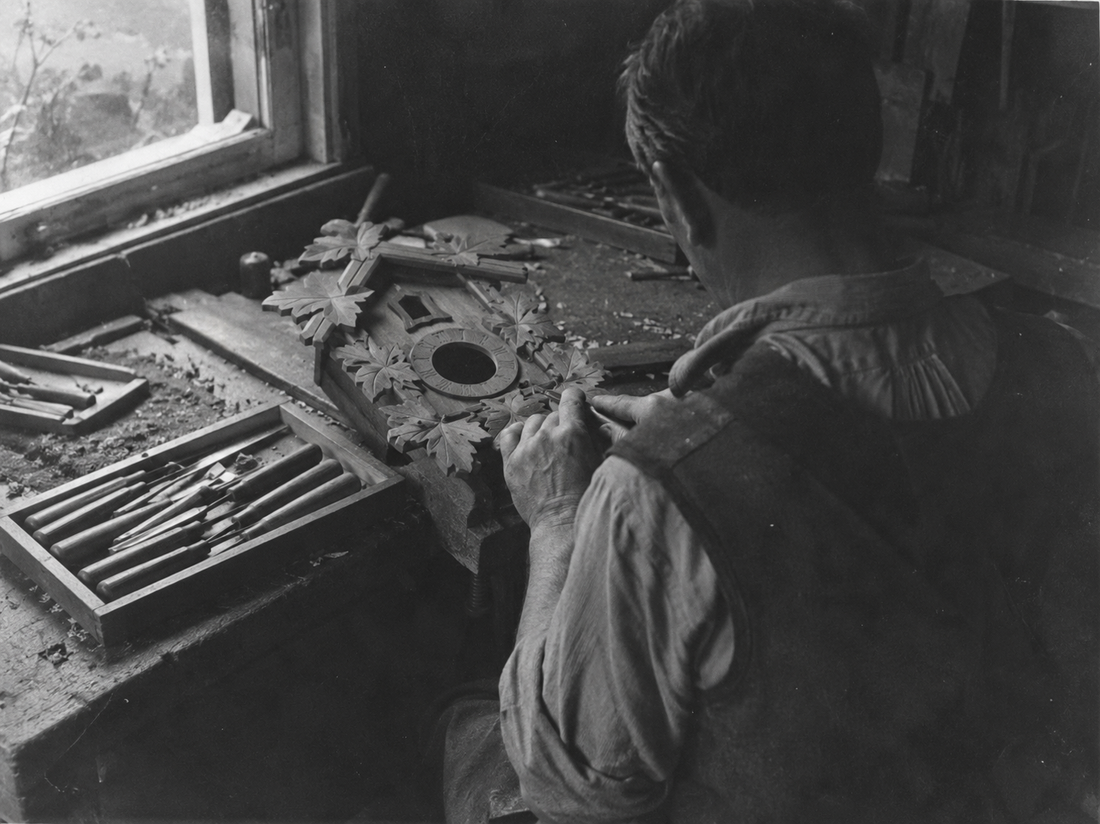
What remains is the essential: mechanical movements from the Black Forest, handwork on every single clock, the VdS certificate as a promise of authenticity. What is new is a new generation and a fresh look ahead.

Almost 180 years after a young clockmaker built his first clock on the Eschenbühl, the same cuckoo calls the hour again. Not as nostalgia, but as a craft with a future.

Timeline

At a glance.

  • 1629Earliest mention of a cuckoo clock, collection of the Elector of Saxony
  • c. 1640First wooden clocks in the Black Forest, Glashof Waldau
  • 1730 to 1742First Black Forest cuckoo clocks
  • c. 1800About 150,000 clocks a year from the Black Forest
  • 1848Anton Schneider founds his workshop on the Eschenbühl in Schonach
  • 1850Clockmaking School Furtwangen, Eisenlohr's Bahnhäusle clock defines the cuckoo clock
  • from 1862Richly decorated cuckoo clocks, fir cone weights
  • c. 1880More than 1.5 million clocks a year from the Black Forest
  • 1952Move to the factory building on Triberger Straße, Schonach
  • 1987Founding of the VdS, certificate of authenticity for Black Forest clocks
  • 2007„Watzmannhaus“ named Cuckoo Clock of the Year
  • 2025Insolvency after 177 years
  • 2026New start: production in Gütenbach

Where Time Becomes a Story.

Every clock is made by hand, piece by piece. See how it is done, or find your own.